Helium
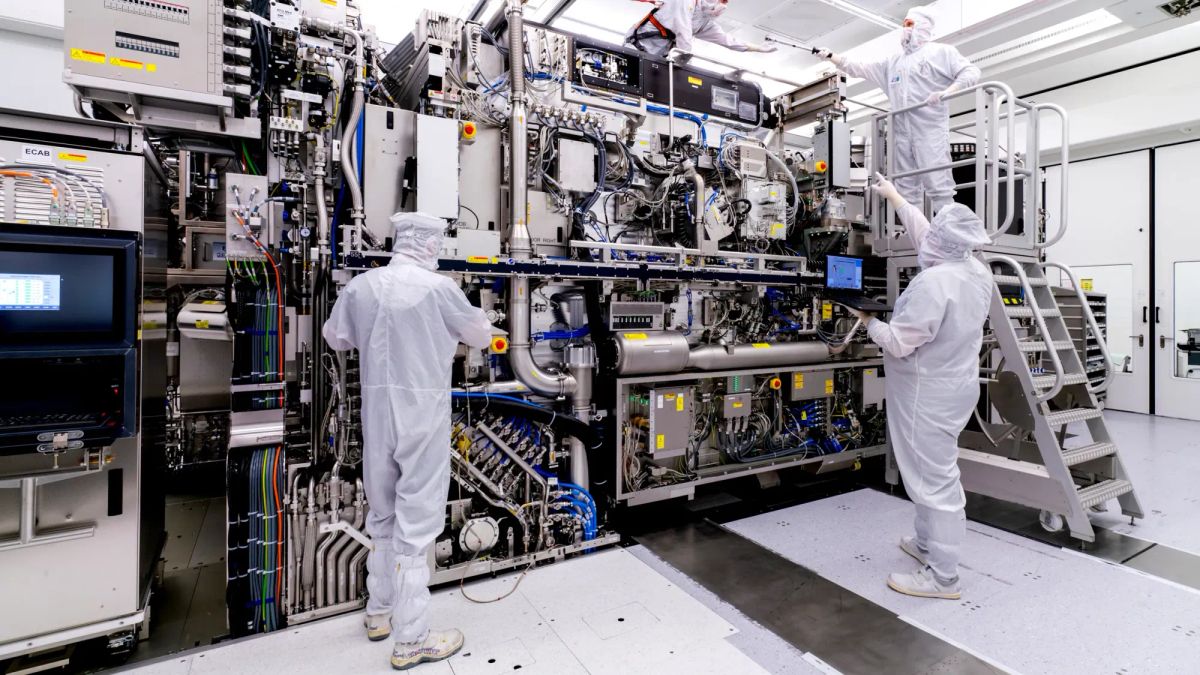
Colourless, odorless, non-toxic, inert, nonatomic. Created from the radioactive decay of uranium and thorium, deep underground over millions of years. It would drift into the atmosphere, unless it becomes trapped, usually in natural gas, or under layers of salt.
Helium is widely used throughout many aspects of our daily life:
- MRI Machines
- Semiconductors - Chip Manufacturing
- Scientific Research
- Balloons
- Rocket Fuel systems
- Welding
- Leak Detection (ie submarines).
Now, can you guess who has the largest identified reserves of uranium in the world? And who is the second largest liquid natural gas exporter in the world?
Australia!
Now, how much Helium do we produce?
Zero
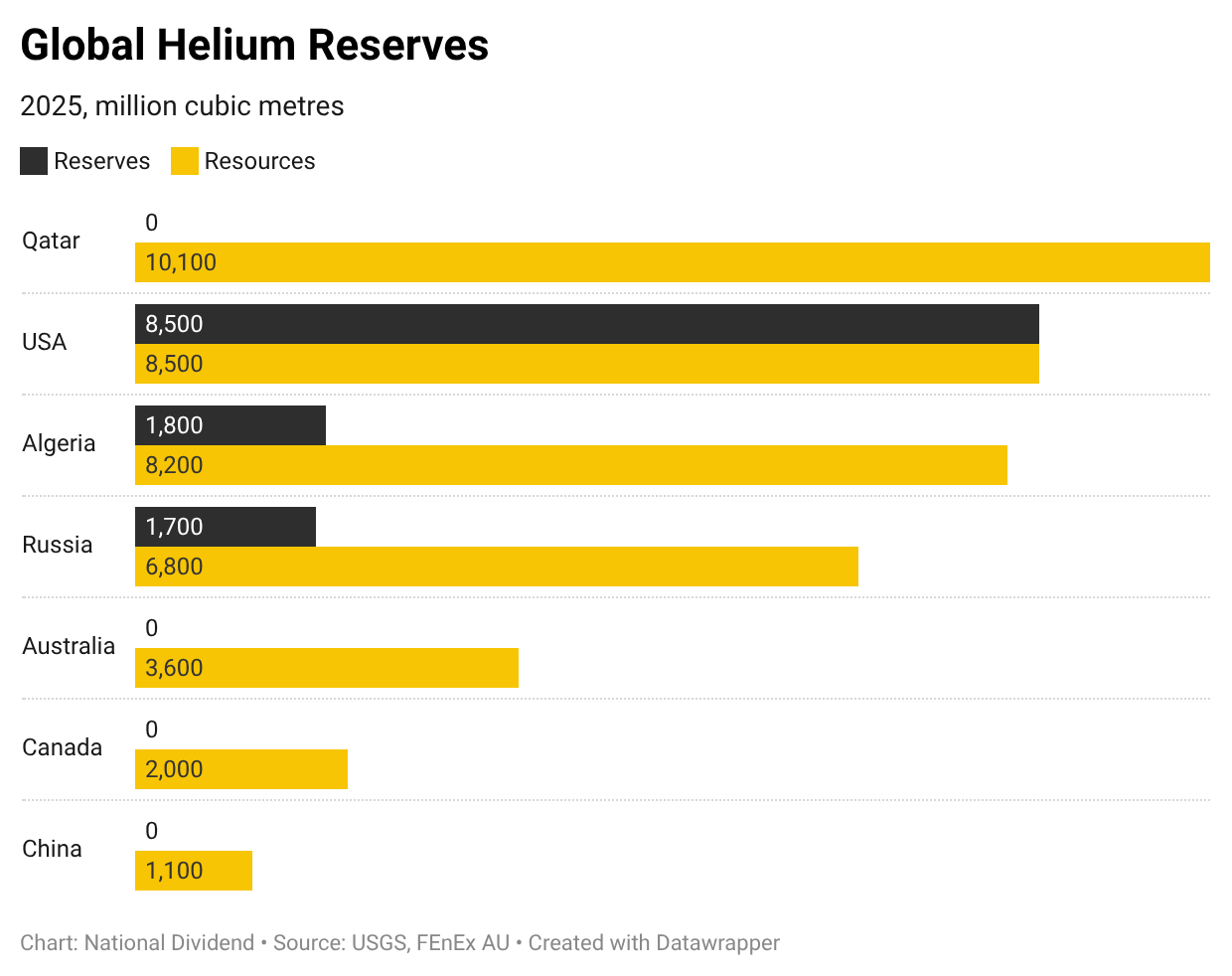
The Australian non-profit Future Energy Exports Cooperative Research Centre (FEnEx CRC) estimates we have 3.6 billion cubic metres of helium in our natural gas resources (actually we have more not in natural gas).
This would place us in top 5 globally of estimated resources (reserves have stricter definitions so this is only proved as you dig and drill).
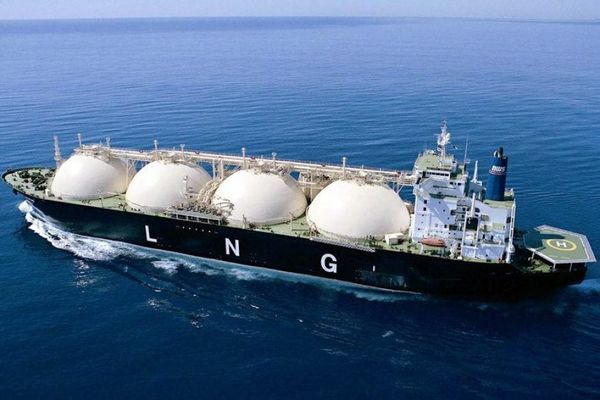
The majority of the world's helium is recovered when you extract natural gas deposits, and then purify the gas before liquification, creating LNG. I.e we do this already in all of our large LNG plants up in WA, NT and QLD.
- Extraction - Standard drill and pump out the gas from underground. Deposits usually contain around 90% methane, plus other items from the environment. CO2, water, and other gas and liquids.
- Clean - Before liquification, all impurities need to be removed. Various filter mechanisms are used, carbon beds, chemical filters etc, to leave just gas: methane, nitrogen and helium.
- Chill - Natural gas is chilled to a liquid at -162C. The main cryogenic heat exchanger is the largest and most expensive part of the whole LNG cycle. This reduces the gas to 1/600 of the volume.
- Flash - The pressurised liquid moves to the unpressurised section, and this results in a 'flash' where some of it evaporates back to gas. As nitrogen and helium have lower boiling points, they evaporate first.
- NRU - most LNG plants have a Nitrogen Rejection Unit (NRU) which strips the nitrogen off this end flash gas and return pure methane back to the plant for power use. The nitrogen and helium are discarded, vented externally into the atmosphere.
*Some plants don't need an NRU, if their gas source is a very high concentration, almost pure methane.
The above is happening already. To capture and process the helium, you simply take this vented gas, and pipe it to a specialised helium plant, ideally setup next door to the LNG plant.
- Helium - Again using the cryogenic process (Helium Recovery Unit), we separate out the nitrogen to get 50+% Helium. A few more filter systems remove the last nitrogen, leaving us with 99.999% Helium. This is known as 5 Nines (5N).
- Liquification - as per natural gas, it is better to transport as a liquid. Again, we cool the Helium down to -269C and store in specialised transport tanks.
- Purification - for semiconductor use in the EUV lithography machines (eg ASML) you need 99.9999% pure Helium (6N). Before liquification you would run it again through more filtration beds and chemicals to strip out the final impurities.
We used to do this
Darwin has an LNG plant 'Darwin LNG', which used to have a Helium Recovery Unit, and associated plant nearby. It was run by BOC/Linde, and from 2010 to 2023, the helium plant produced 4.25 million cubic meters per year. Enough to meet all domestic demand and have some left over for export.
The Bayu-Undan gas field, which fed the Darwin LNG plant, ran out in 2023. Replacement gas was lined up to come (Barossa - and is now flowing as of 2026) however this took about 18-24 months to happen. Instead of waiting, BOC closed the plant and shipped the equipment overseas.
Global Market
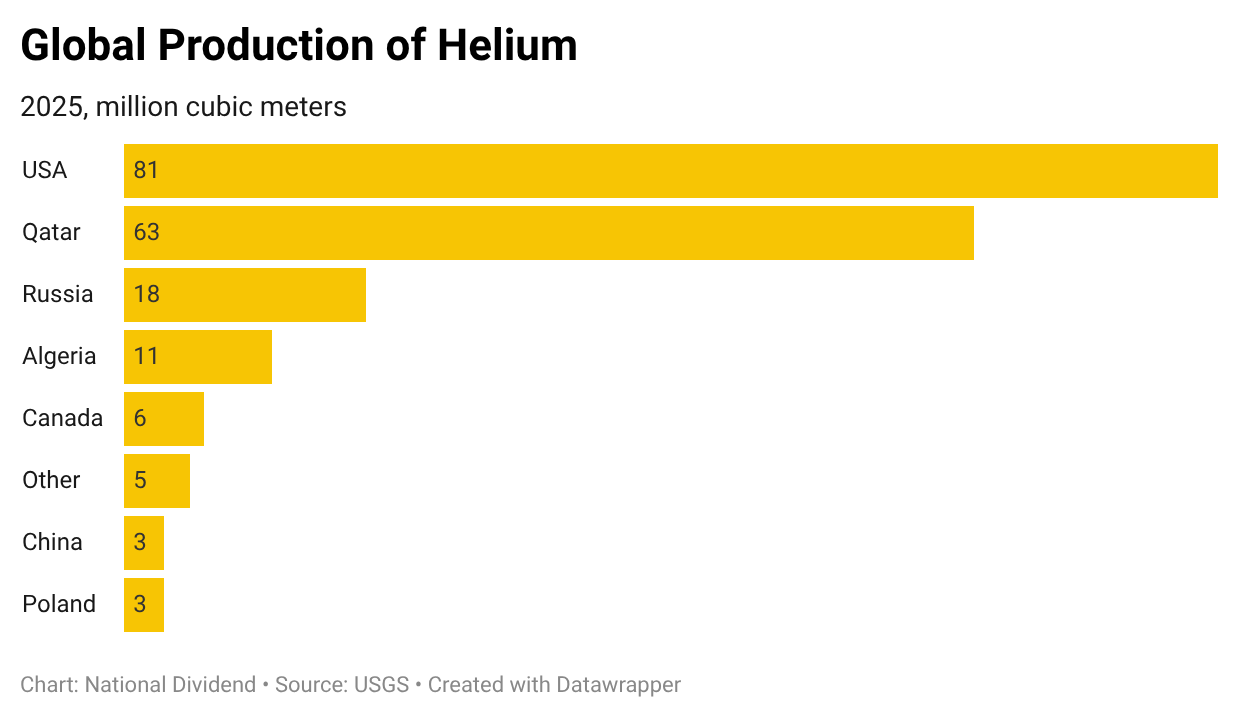
Globally, production of Helium is a duopoly of USA and Qatar. Our past Helium plant at Darwin would put us on this list, between Canada and China, from 1 plant alone.
Qatar's Ras Laffan industrial city was attacked recently by Iran. So apart from the Strait of Hormuz blockage (no supply of Helium getting out of there), Qatar's output is reduced, for years and years to come:
Iranian attacks have knocked out 17% of Qatar's liquefied natural gas (LNG) export capacity, causing an estimated $20 billion in lost annual revenue and threatening supplies to Europe and Asia, QatarEnergy's CEO and state minister for energy affairs told Reuters on Thursday.
Saad al-Kaabi said two of Qatar's 14 LNG trains and one of its two gas-to-liquids (GTL) facilities were damaged in the unprecedented strikes. The repairs will sideline 12.8 million tons per year of LNG for three to five years, he said in an interview. Reuters
So global supply will be reduced for 3 - 5 years, even if no further damage is done.
Short video from CBNC on the whole situation.
Opportunity
Right now, we are converting huge amounts of natural gas to LNG (remember, second largest exporter in the world), and in the process venting helium into the air as waste.
Immediately, we should setup a processing plant at Darwin (again), this time capture the helium from 2x LNG plants there: Darwin LNG and Ichthys LNG. FEnEx AU have done some analysis for us:
Darwin LNG - NRU Vent capture. The previous setup (same LNG plant) produced 913 tonnes per annum (tpa) of helium from 3.7 Mtpa LNG throughput with 0.128 mol% helium feed. However, the new field (Barossa) could have different Helium amounts in the gas, so let's say 500-900 tpa.
Ichtyhs LNG - Non NRU Vent, using a membrane to capture helium - the FEnEx report estimates 1,200-1,800 tpa helium (8.9 Mtpa LNG, 0.058 mol% helium).
So for both, the range is 1700 to 2,700 tpa. Mid Point 2,200 tpa helium, which at current market values is A$200m revenue in one year. From a plant that costs A$200-300m to build.
The helium for semiconductor use (6N) is worth 7x the price of 5N at the moment. If we dedicated only 20% towards this, you would double your revenue to A$400m. Now do another plant in Northwest WA, and your closer to $1bn now.
Countries who make computer chips and electronics - China, Taiwan, South Korea and Japan in Asia, and USA (but they have their own supply), need the pure 6N Helium. They have no local reserves or production at all.
Yet with Qatar production down, the current option is Russia, who is sanctioned and still conducting war in Ukraine.
Summary so Far
- Australia has a lot of Helium, trapped in our Natural Gas.
- Australia exports a lot of Natural Gas (as LNG), performing 90% of the hard work to get this Helium, but then we throw it away.
- Australia used to have a Helium plant, however it was closed.
- Global Export market is dominated by USA, Qatar.
- China, Taiwan, South Korea, Japan, all need helium, and are already big buyers of Australian LNG
- .....
There's an opportunity here to a) shore up domestic supply of an important natural resource, b) offer up a diversified, stable supply to our neighbours and largest trading parters (who we already ship LNG too), and c) earn some money on the side.
Government has a role to play here. Simply mandate any new LNG plant to stop venting, and capture the gas by-products, and encourage a helium supplier to setup shop here (they did before).
Our above example was one plant on 2 fields in Darwin. If we had captured helium from all our LNG plants instead of venting into the air, we would have earned us billions already and avoid import dependency of a critical element.
However, at the moment I am not aware of any plans to do so...